
Why Do Some Car Parks Use Coloured Surfacing? | C&R Ltd
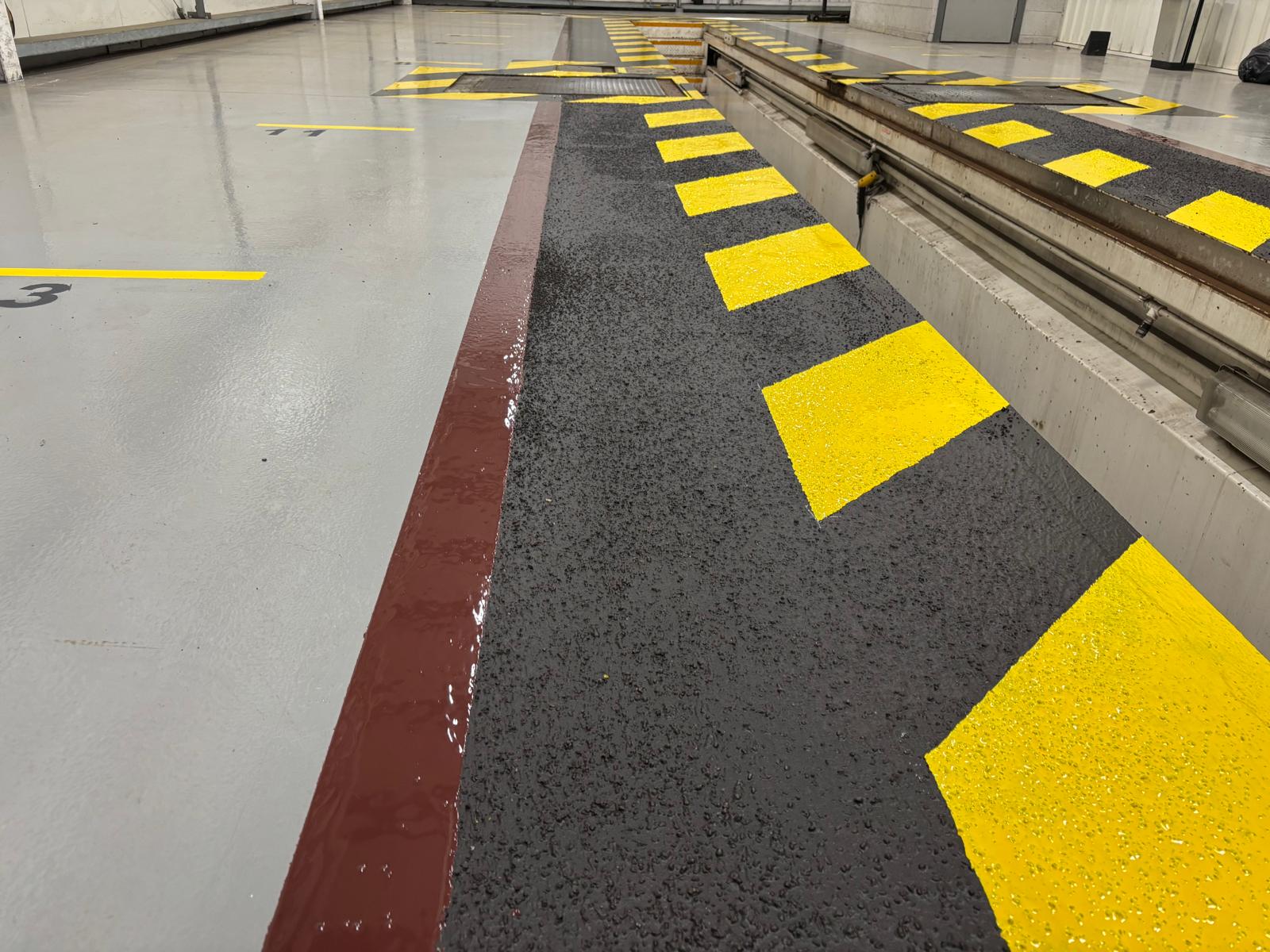
You’ve probably noticed it on retail parks, supermarkets, and commercial developments. Rather than just white lines on black asphalt, some car parks have whole sections of coloured surfacing defining pedestrian areas, crossing points, or specific zones.
“Why would you colour a whole area when you could just mark the lines?”
It’s a fair question. Coloured surfacing costs more than standard line marking, so there needs to be a reason for using it. And there usually is, though the decision isn’t always as straightforward as it looks.
What coloured surfacing actually is.
Coloured surfacing is a coating or treatment applied to the full surface of a defined area, rather than just the lines around it. It changes the colour and often the texture of the surface itself.
Common types include:
- Resin-bound or resin-bonded systems where coloured aggregate is applied over the existing surface
- Anti-slip coloured coatings that add both colour and grip
- Coloured asphalt laid as part of the original surfacing
- Surface dressing with coloured aggregate applied over a binder
The result is a clearly defined zone that’s visually distinct from the surrounding surface, not just outlined by lines but filled with colour.
Where it's typically used.
Coloured surfacing tends to appear in areas where stronger visual definition is needed than line marking alone can provide.
Common applications include:
- Pedestrian crossing points on busy car parks where a zebra-style line marking might not be visible enough
- Pedestrian walkways through vehicle areas, particularly on retail parks where foot traffic is heavy
- Cycle lanes on sites that integrate cycling infrastructure
- Speed reduction zones around building entrances or school drop-off areas
- Designated zones like taxi ranks, bus stops, or drop-off areas that need to stand out clearly
- Entrance features where the car park design is part of the site’s overall aesthetic
The common thread is visibility. Coloured surfacing makes a zone unmissable in a way that lines alone sometimes don’t.
The visibility advantage.
This is the main reason coloured surfacing gets specified over standard line marking in certain areas.
A white line on dark asphalt defines the edge of something. Coloured surfacing defines the whole area. The difference in visibility, particularly from a driver’s perspective approaching at speed, is significant.
On a busy retail car park where pedestrians are crossing between parked cars and moving traffic, a red or buff coloured crossing zone is far more noticeable than white lines on the ground. It registers peripherally, even when a driver isn’t specifically looking for it.
For pedestrians, a coloured walkway gives a stronger sense of being in a protected zone than walking between two painted lines on otherwise identical asphalt.
The safety and anti-slip benefit.
Many coloured surfacing systems incorporate anti-slip properties as part of the treatment. The aggregate used in resin-bound systems adds texture to the surface, improving grip in wet conditions.
This makes coloured surfacing a practical choice in areas where slip risk is a concern:
- Pedestrian crossings that get wet in rain
- Ramps and slopes where vehicles and pedestrians interact
- Building entrances where foot traffic transitions from smooth internal floors to external surfaces
- Any area where the existing surface has become polished or worn smooth
In these situations, coloured surfacing does two jobs at once. It defines the zone visually and improves the surface safety at the same time.
When line marking is enough.
Coloured surfacing isn’t always necessary, and it’s not always the right choice.
Standard line marking is perfectly adequate for:
- Bay markings and general car park layout
- Directional arrows and traffic flow markings
- Hatching and keep-clear zones
- Disabled bay and EV bay marking
- Most internal warehouse markings
In these situations, the lines themselves provide sufficient definition and the cost of full-surface colouring isn’t justified. The surface beneath the lines doesn’t need to change for the markings to do their job.
The decision usually comes down to whether the area needs to be seen at a glance by someone moving through it, or whether the markings are there to define a layout that people engage with at slower speeds.
Cost considerations.
Coloured surfacing costs more per square metre than standard line marking. The material cost is higher, the application is more labour-intensive, and the surface preparation requirements are often more demanding.
That said, the cost needs to be weighed against what it delivers:
- Better visibility in high-risk areas
- Anti-slip properties that might otherwise need a separate treatment
- Longer lifespan in some applications, particularly where resin systems are used
- Reduced need for frequent remarking in areas where standard paint would wear quickly
On a whole-car-park basis, coloured surfacing is significantly more expensive than line marking. But applied strategically to the areas that need it most, it can be a cost-effective investment in safety and clarity.
Maintenance and longevity.
Like any surface treatment, coloured surfacing wears over time. Traffic, weather, cleaning, and UV exposure all take their toll.
Resin-bound systems are generally durable and can last several years on a well-prepared surface. But they do require maintenance. Aggregate can loosen, colour can fade, and edges can start to break down, particularly in areas with heavy turning traffic.
Regular inspection and targeted repairs keep coloured surfacing performing well. Ignoring deterioration until the surface has failed completely means a full reapplication rather than a simple patch, which is more expensive and more disruptive.
Combining both approaches.
On most commercial sites, the answer isn’t coloured surfacing or line marking. It’s both, used in the right places for the right reasons.
A typical approach might use:
- Standard line marking for bays, arrows, symbols, and general layout
- Coloured surfacing for pedestrian crossings, walkways, and high-visibility zones
- Anti-slip coloured coatings on ramps, slopes, and wet-risk areas
This gives the site the clarity and safety it needs without the cost of colouring every surface. The key is identifying which areas genuinely benefit from the additional visibility and specifying accordingly.
Conclusion.
So, why do some car parks use coloured surfacing instead of line marking?
Because in certain areas, lines alone don’t provide enough visibility or safety. Coloured surfacing makes zones unmissable, adds anti-slip properties, and creates a stronger visual separation between pedestrians and vehicles.
It’s not a replacement for line marking. It’s a complement to it, used strategically where the extra visibility and surface performance are worth the investment.
If you’re considering coloured surfacing for pedestrian areas, crossings, or high-risk zones on your site, C&R Ltd can advise on the right system and help you decide where it adds genuine value. We apply both line marking and coloured surfacing systems across commercial sites nationwide.
Why Choose C&R.
As one of the UK’s leading specialists in line marking, surface preparation, coatings, and cleaning, C&R delivers expert advice, professional results, and long-lasting performance nationwide.
Over 30 Years’ Experience
Trusted nationwide by major brands and local authorities.
Fully Accredited & Insured
Working to UK safety and environmental standards.
Complete Start-to-Finish Service
From design and preparation to marking and aftercare.
Nationwide Coverage
Responsive teams operating across England, Scotland, and Wales.