
When Should Warehouse Line Marking Be Refreshed?
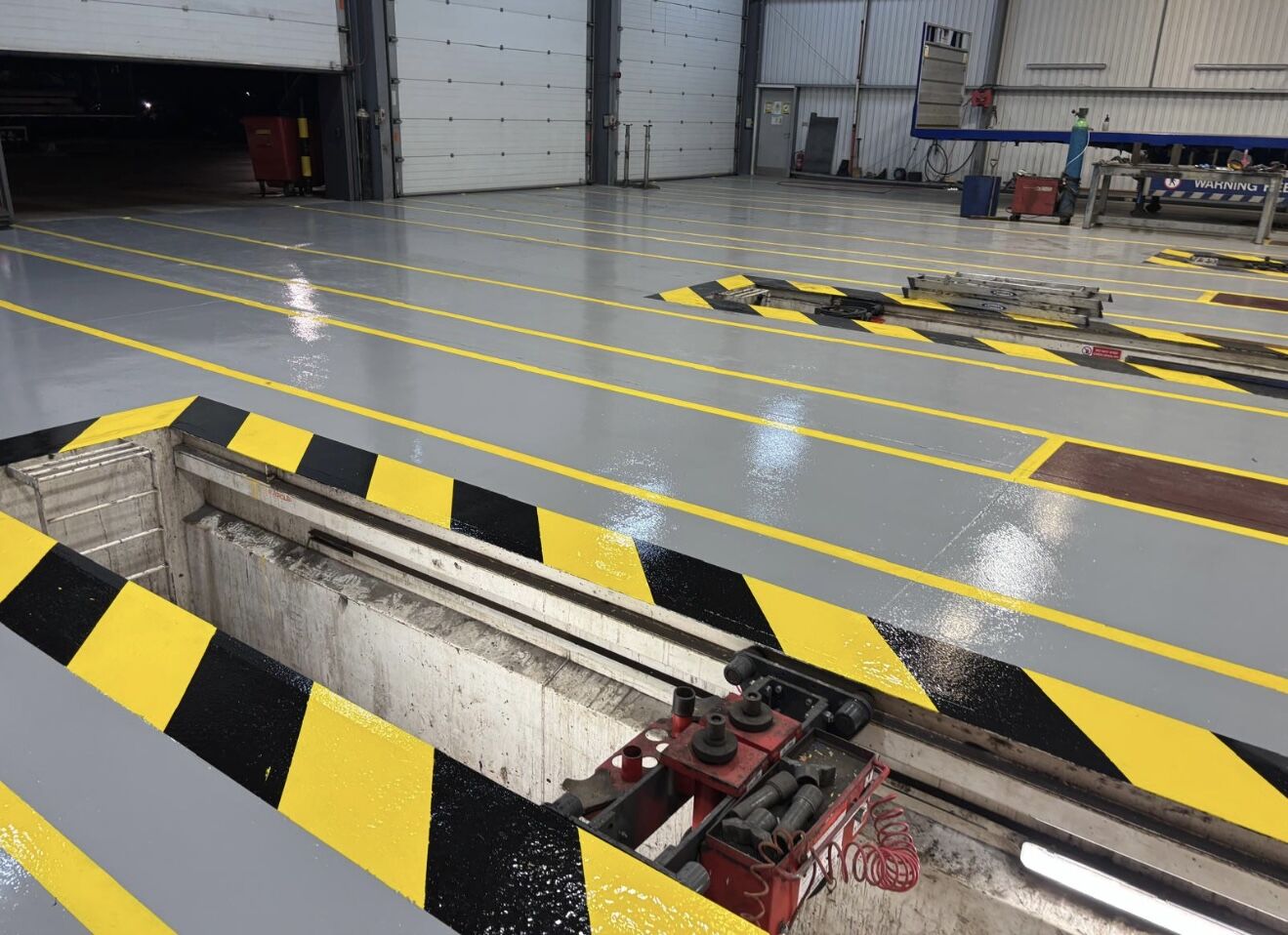
Walk into almost any warehouse and you’ll see line marking everywhere — walkways, forklift routes, loading zones, hazard areas. Because it’s so familiar, it’s easy for it to fade into the background.
Until someone asks the question:
When should warehouse line marking actually be refreshed?
For many sites, the honest answer is “later than it should have been”. Not because people don’t care — but because worn markings don’t fail dramatically. They fail quietly.
Why warehouse line marking is easy to ignore.
Unlike damaged racking or broken barriers, faded lines don’t stop work immediately.
People adapt. They remember where routes used to be. They rely on experience instead of visual cues. Operations keep moving — just with a little more uncertainty built in.
That’s what makes line marking deceptively risky. By the time it looks bad, behaviour has already changed around it.
The moment markings stop doing their job.
Warehouse line marking isn’t there to look tidy — it’s there to influence behaviour.
Once markings no longer clearly show:
-
Where pedestrians should walk
-
Where vehicles have priority
-
Where stopping or standing is unsafe
-
How shared spaces are meant to operate
they’ve stopped serving their purpose, even if traces of paint are still visible.
Why warehouse environments destroy markings so quickly.
Warehouses are one of the harshest environments for floor markings.
Constant forklift traffic, pallet movement, braking, tight turns, cleaning regimes, and surface abrasion all accelerate wear. The most critical areas — crossings, junctions, aisle ends, pick faces — are usually the first to degrade.
This is why warehouse markings often need refreshing far sooner than people expect.
Why refresh timing isn’t about calendars.
There’s no universal rule that says warehouse line marking should be refreshed every year or every five years.
The right timing depends on:
-
Traffic volume and vehicle types
-
Pedestrian interaction levels
-
Floor condition and finish
-
Whether the layout still reflects how the space is actually used
Some sites benefit from targeted refreshes in high-wear areas. Others reach a point where repainting the existing layout would simply lock in inefficiencies.
Using refreshes to fix more than fading paint.
Remarking is one of the few opportunities to step back and challenge the layout.
It’s a chance to:
-
Improve pedestrian and vehicle separation
-
Remove routes that no longer make sense
-
Reduce conflict points and blind spots
-
Strengthen high-risk areas with more durable systems
Handled properly, refreshing line marking improves flow and safety — not just appearance.
How C&R approaches warehouse line marking refreshes.
At C&R Ltd, we don’t treat remarking as a like-for-like repaint.
We look at how people and vehicles actually move through the warehouse, where wear is occurring fastest, and where clarity is most critical. From there, we advise on refresh timing, layout changes, and materials that suit real operational pressure — not just what was used last time.
Conclusion.
Warehouse line marking should be refreshed when it stops guiding behaviour — not when it finally disappears.
Clear, timely remarking reduces assumption, supports safer movement, and helps warehouses run more smoothly under pressure.
If your warehouse markings haven’t been properly reviewed for a while, it may be time to ask whether they’re still doing the job they were put there to do.
Why Choose C&R.
As one of the UK’s leading specialists in line marking, surface preparation, coatings, and cleaning, C&R delivers expert advice, professional results, and long-lasting performance nationwide.
Over 30 Years’ Experience
Trusted nationwide by major brands and local authorities.
Fully Accredited & Insured
Working to UK safety and environmental standards.
Complete Start-to-Finish Service
From design and preparation to marking and aftercare.
Nationwide Coverage
Responsive teams operating across England, Scotland, and Wales.