
What Are Ghost Lines and How Do You Remove Them?
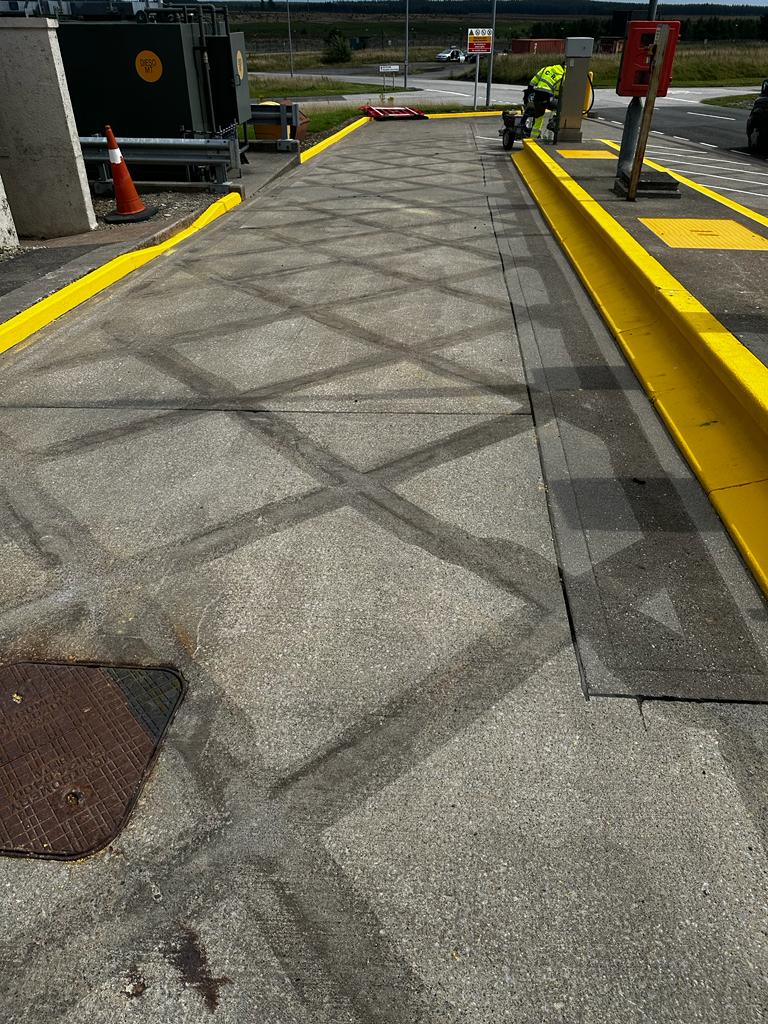
If you’ve ever had a car park or warehouse floor remarked and noticed the old layout still showing through, you’ve seen ghost lines.
“We had the car park relined, but you can still see where the old markings were. Why?”
It’s one of the most common complaints after line marking works, and it causes real problems. Drivers follow the old layout instead of the new one. Bays look messy. The whole job looks unfinished, even when the new markings themselves are perfectly applied.
So what causes ghost lines in line marking, and what’s the right way to deal with them?
What ghost lines actually are.
Ghost lines are the visible remains of old line markings that haven’t been fully removed before new markings were applied, or that have been removed but left a shadow or stain on the surface.
They show up because line marking materials don’t just sit on top of a surface. Over time, paint and coatings penetrate into the pores of asphalt and concrete. Even when the bulk of the material is removed, a trace of colour or texture often remains.
On dark asphalt, white ghost lines are particularly obvious. On lighter concrete, any colour can leave a visible shadow that catches the eye, especially in direct sunlight or when the surface is wet.
Why they cause problems.
Ghost lines aren’t just a cosmetic issue. On a car park where the layout has changed, old markings that are still visible create genuine confusion.
The main problems include:
- Drivers following the old layout instead of the new one
- Conflicting bay markings making parking chaotic
- Pedestrian routes and directional arrows that no longer apply
- The site looking poorly maintained, which reflects on the operator
On warehouse floors, ghost lines from previous zoning schemes can cause similar confusion around pedestrian walkways, exclusion zones, and racking layouts. If people can see two sets of markings and aren’t sure which one to follow, the markings stop doing their job.
What causes them in the first place.
Ghost lines usually appear for one of a few reasons:
- Old markings weren’t removed before remarking. The new layout was simply painted over the old one, and the old lines are visible between or alongside the new markings.
- Removal was attempted but didn’t go deep enough. The surface layer of paint was taken off, but the staining underneath was left behind.
- The wrong removal method was used. Some methods work better on certain surfaces and materials than others. Using the wrong approach can leave more residue than it removes.
- The surface itself has been stained. On porous surfaces like asphalt, paint can soak in deep enough that complete removal without damaging the surface becomes very difficult.
How ghost lines are removed.
The right removal method depends on the surface type, the material that was used for the original markings, and how deep the staining goes.
Common methods include:
- Shot blasting removes the top layer of the surface along with the marking material. This is one of the most effective methods for ghost line removal on concrete and asphalt because it takes away the stained layer rather than just the paint on top.
- High pressure water blasting can remove markings without damaging the surface, though it may not fully eliminate deep staining on porous materials.
- Grinding or scarifying physically removes the surface layer and any embedded marking material. Effective but more aggressive, so it needs to be used carefully to avoid creating an uneven finish.
- Chemical removal uses solvents to break down the marking material. Can work well on some coatings but is slower and may not be suitable for all environments.
In most cases, shot blasting or high pressure water blasting gives the best balance between thorough removal and surface preservation. The goal is to remove enough material that the ghost line disappears without causing damage that then needs repairing before the new markings can go down.
Can ghost lines be prevented?
To some extent, yes. The most effective way to prevent ghost lines is to remove old markings properly before applying new ones, rather than painting over them and hoping for the best.
A few things that help:
- Include line removal in the scope of work from the start rather than treating it as an optional extra
- Choose the removal method based on the surface and material, not just cost
- Accept that on older surfaces with multiple layers of previous markings, complete removal may require more intensive preparation
- Allow time in the programme for removal and surface recovery before new markings are applied
If the layout isn’t changing and you’re simply refreshing existing markings in the same position, ghost lines are less of a concern. But any time a layout changes, proper removal of the old scheme should be part of the plan.
When to accept some residual marking.
It’s worth being realistic. On some surfaces, particularly older asphalt that’s had multiple layers of paint over the years, achieving a completely clean surface with zero trace of previous markings may not be possible without damaging the surface.
In these situations, the aim is to reduce the ghost lines to a level where they don’t cause confusion. That might mean removing enough that the old markings are barely visible in normal conditions, even if a faint trace remains when the surface is wet or in certain light.
A good contractor will be upfront about what’s achievable on your specific surface rather than promising a perfect result that isn’t realistic.
Conclusion.
So, what are ghost lines and how do you remove them?
Ghost lines are the visible remains of old markings that show through after remarking or incomplete removal. They cause confusion, make sites look untidy, and undermine the purpose of the new layout.
The right removal method depends on the surface and the material, but shot blasting and high pressure water blasting are the most commonly used approaches. The key is making line removal part of the plan from the start, not an afterthought.
If you’ve got ghost lines causing problems on your site, or you’re planning a remark and want to make sure the old layout is dealt with properly, C&R Ltd can advise on the best removal approach for your surface and get the job done right.
Why Choose C&R.
As one of the UK’s leading specialists in line marking, surface preparation, coatings, and cleaning, C&R delivers expert advice, professional results, and long-lasting performance nationwide.
Over 30 Years’ Experience
Trusted nationwide by major brands and local authorities.
Fully Accredited & Insured
Working to UK safety and environmental standards.
Complete Start-to-Finish Service
From design and preparation to marking and aftercare.
Nationwide Coverage
Responsive teams operating across England, Scotland, and Wales.