
How Is Line Marking Priced? What Affects the Cost? | C&R Ltd
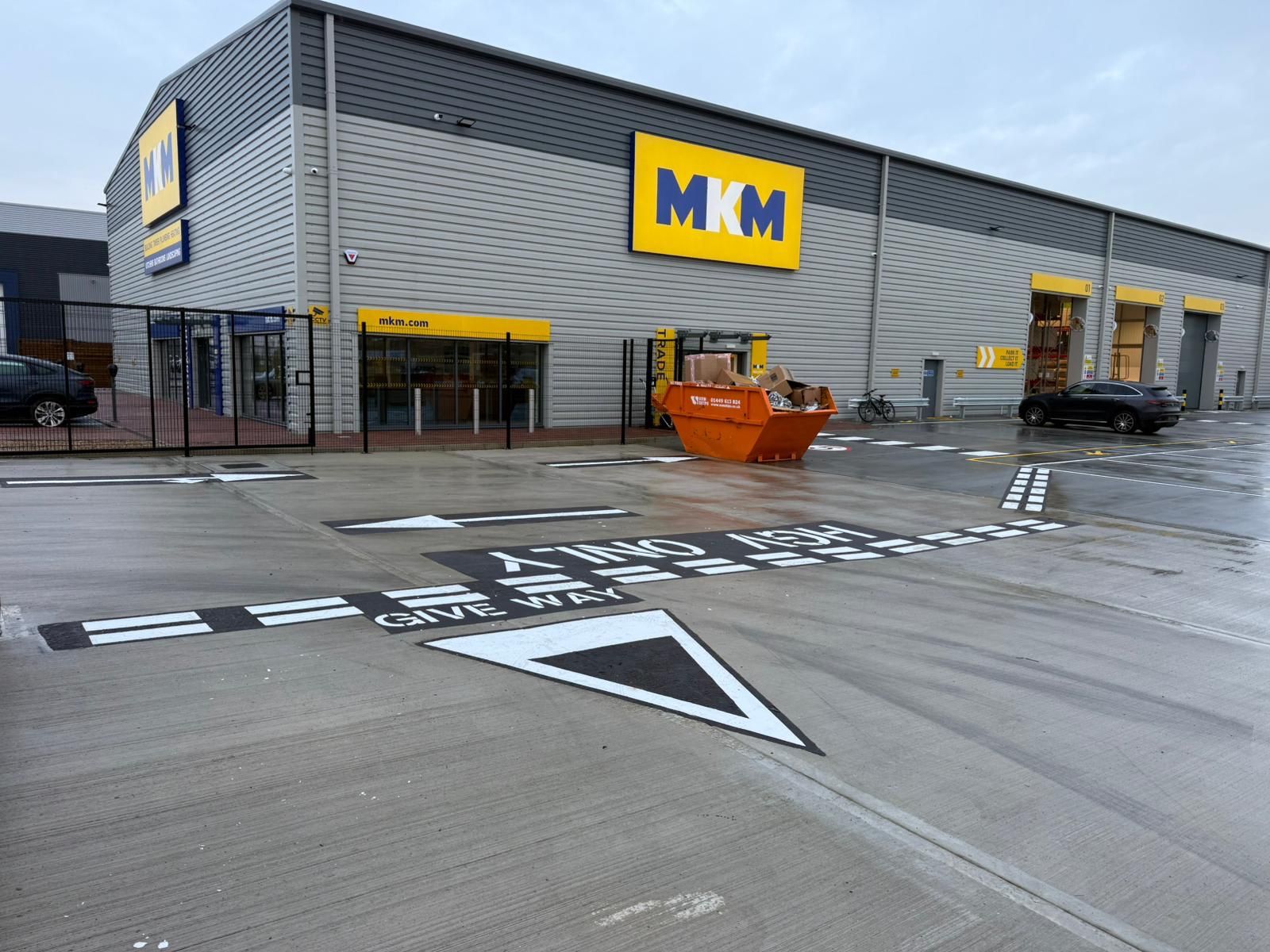
It’s one of the first questions anyone asks when they’re getting quotes for line marking work:
“How much does line marking cost, and what am I actually paying for?”
The honest answer is that it varies, and not just by a small amount. Two quotes for what looks like the same job can be significantly different depending on what’s included, what materials are being used, and how the work is being planned.
Understanding how line marking is priced helps you compare quotes properly and avoid the common trap of choosing the cheapest option only to pay more in the long run.
There's no single price per metre.
Some people expect line marking to be priced like buying paint by the tin. A set rate per metre, multiplied by however many metres you need.
In practice, it’s more nuanced than that. A metre of line in an empty warehouse with clean concrete is a very different job to a metre of line on a live retail car park with cracked asphalt, old markings to remove, and traffic management to deal with.
The price reflects the full scope of what’s involved, not just how much material goes on the ground.
What affects the cost.
There are several factors that influence how line marking is priced. The main ones include:
- Material type. Standard road paint is the most affordable. Thermoplastic costs more but lasts significantly longer. MMA systems sit at the higher end but cure faster and offer excellent durability. The right material depends on the site, not the budget.
- Surface preparation. If the surface needs cleaning, degreasing, shot blasting, or old line removal before marking can start, that adds to the scope. Skipping preparation to save money is one of the main reasons markings fail early.
- Site size and complexity. A simple open car park with standard bays is more straightforward than a multi-level car park with tight access, complex layouts, directional arrows, symbols, and text.
- Access and working hours. Night working, weekend working, or phased access on a live site all affect the programme and cost. The more constrained the working window, the more it costs to deliver.
- Traffic management. On live sites, coning, barriers, signage, and sometimes banksmen are needed to keep the work area safe. This is a necessary cost that some quotes include and others don’t.
- Location and mobilisation. Getting a crew and equipment to site has a cost. A single small job at the other end of the country will carry a higher mobilisation cost per metre than a large project or a job that can be grouped with other work in the same area.
- Number of colours and markings. Multiple colours, symbols, text, and specialist markings like disabled bay logos or EV symbols all add time and therefore cost.
Why the cheapest quote often isn't the best value.
This is worth understanding because it catches people out regularly.
A low quote might mean:
- Preparation has been reduced or excluded
- A cheaper, less durable material has been specified
- Traffic management hasn’t been properly accounted for
- Working time has been underestimated, meaning the job gets rushed
- Line removal hasn’t been included when it should be
The result is often work that looks acceptable on day one but starts failing within months. At that point you’re paying for the job twice, once for the original work and again for the remedial.
A slightly higher quote that includes proper preparation, the right material, and realistic programming almost always works out cheaper over the life of the markings.
What should be included in a quote.
A good quote for line marking should make it clear what you’re getting. Things to look for:
- The material system being used
- What surface preparation is included
- Whether old line removal is part of the scope
- Working hours and any phasing arrangements
- Traffic management provisions
- A breakdown that lets you see where the cost sits rather than a single lump sum
If a quote is just a number with no detail behind it, it’s very difficult to compare against another quote fairly. You might be comparing a comprehensive job against one that’s missing half the scope.
How to get better value.
There are a few things you can do as a client to get better value from line marking without cutting corners:
- Combine works. If you have multiple sites or multiple areas to mark, grouping them into a single programme reduces mobilisation costs and often gets better rates.
- Plan ahead. Giving your contractor reasonable lead time allows them to schedule efficiently. Rush jobs cost more because they disrupt other planned work.
- Get the preparation right. Spending a bit more upfront on surface preparation extends the life of the markings and reduces the frequency of remarking.
- Choose the right material for the situation. Don’t default to the cheapest option. On a high traffic site, a more durable system that lasts three to five years is better value than a cheaper one that needs redoing every 12 months.
- Ask questions. If a quote seems too low, ask what’s been excluded. If it seems high, ask the contractor to explain what’s driving the cost. A good contractor will be happy to walk you through it.
Conclusion.
So, how is line marking priced?
It depends on the materials, preparation, site complexity, access, and programme. There’s no universal rate per metre because every site is different.
The key is understanding what you’re paying for and making sure the quote covers the full scope of what’s needed, not just the visible paint on the ground. The cheapest quote rarely delivers the best outcome, and the most expensive one isn’t always necessary either.
If you’re looking for line marking quotes and want a clear, detailed breakdown of what’s involved, C&R Ltd can survey your site and provide a transparent proposal based on what the job actually needs. No hidden exclusions, no surprises.
Why Choose C&R.
As one of the UK’s leading specialists in line marking, surface preparation, coatings, and cleaning, C&R delivers expert advice, professional results, and long-lasting performance nationwide.
Over 30 Years’ Experience
Trusted nationwide by major brands and local authorities.
Fully Accredited & Insured
Working to UK safety and environmental standards.
Complete Start-to-Finish Service
From design and preparation to marking and aftercare.
Nationwide Coverage
Responsive teams operating across England, Scotland, and Wales.