
How Do You Mark Out a Safe Loading Bay? | C&R Ltd
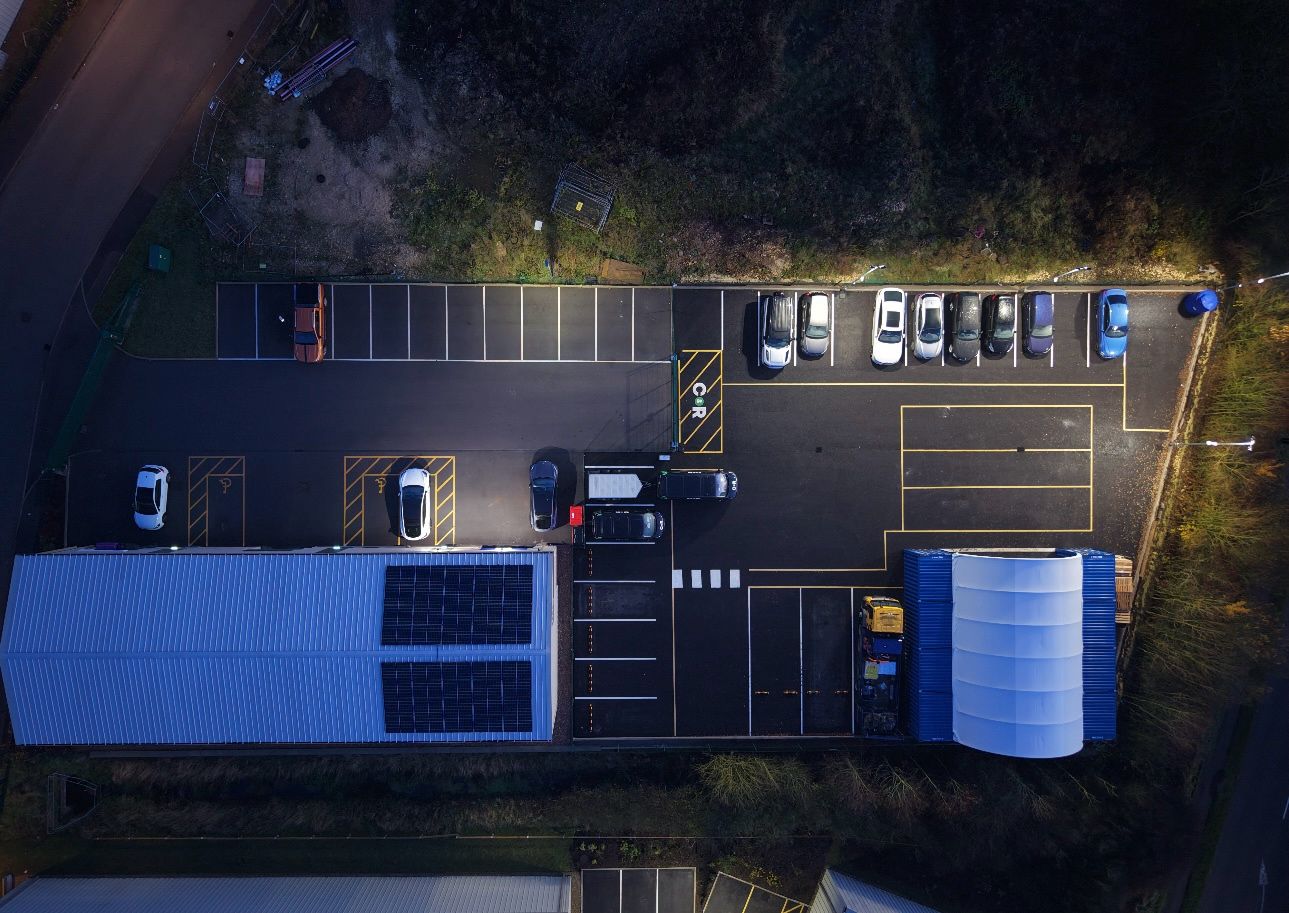
Loading bays are some of the highest risk areas on any commercial site. HGVs reversing, tail lifts operating, goods being moved on and off vehicles, forklifts crossing between the bay and the building, and pedestrians passing through or nearby.
“What markings should a loading bay actually have to keep it safe?”
It’s a question that often doesn’t get asked until after an incident or a near miss. A lot of loading bays have minimal marking, sometimes just a painted box on the ground showing where the vehicle should park. That’s not enough to manage the risks involved.
Why loading bays need more than a painted box.
A loading bay isn’t just a parking space for a lorry. It’s a working area where multiple activities happen simultaneously, often involving heavy vehicles, mechanical equipment, and people on foot.
The risks include:
- Vehicles reversing into pedestrians or other vehicles
- Tail lifts striking people or objects during operation
- Forklifts crossing pedestrian routes to reach the vehicle
- Goods falling during loading or unloading
- Vehicles moving off while someone is still on or behind the vehicle
Clear floor markings won’t eliminate these risks on their own, but they define the space, set expectations for how it should be used, and create visual boundaries that everyone on site can understand.
What a well-marked loading bay includes.
A properly marked loading bay goes beyond an outline of where the vehicle goes. It typically includes several elements working together.
Vehicle position markings. Clear lines showing where the vehicle should stop, including guide lines to help drivers position accurately when reversing. On sites with multiple bays, numbered bay markings help with logistics coordination.
Pedestrian exclusion zones. Hatched areas around the rear and sides of the bay where pedestrians should not enter while loading or unloading is in progress. These are typically marked in red and white or yellow and black hatching to signal danger.
Tail lift operating zones. A marked zone behind the vehicle showing the area swept by a tail lift during operation. This area needs to be kept clear whenever a vehicle is docked.
Pedestrian routes past the bay. If people need to walk past or near the loading bay, a defined walkway that routes them safely around the working area rather than through it. This should connect to the wider pedestrian route scheme on the site.
Forklift crossing points. Where forklifts cross between the bay and the building, marked crossing points help manage the interaction between MHE and pedestrians. Stop lines, warning markings, or coloured surfacing can all reinforce the crossing point.
Keep clear zones. Markings around any bollards, barriers, fire equipment, or building access points within or near the loading bay that must remain unobstructed.
Colour conventions.
Loading bay markings typically follow recognisable colour conventions to communicate risk levels at a glance:
- White for vehicle position lines and general bay markings
- Yellow and black for hazard warnings, particularly around edges, drops, and pinch points
- Red and white or red for exclusion zones and high-risk areas
- Green or blue for pedestrian safe routes through or around the area
Consistency matters. If the loading bay uses a different colour scheme to the rest of the site, it creates confusion rather than clarity. The bay markings should integrate with the wider site marking scheme.
Dimensions and layout.
Loading bay dimensions depend on the size of vehicles using them. A bay designed for transit vans is very different from one handling articulated HGVs.
Key dimensions to consider:
- Bay width. Wide enough for the vehicle plus clearance on both sides for safe access. Cramped bays increase the risk of damage to vehicles, infrastructure, and people.
- Bay depth. Long enough for the full vehicle, including any overhang from the cab or trailer.
- Approach and departure space. Enough room for the vehicle to manoeuvre in and out safely, particularly when reversing. Tight approaches lead to more frequent damage to bollards, kerbs, and the bay itself.
- Exclusion zone depth. The hatched area behind and beside the bay needs to be large enough to account for tail lift swing, load handling, and a safe buffer from pedestrian routes.
On sites where space is tight, it can be tempting to squeeze the bay markings to fit. But reducing the exclusion zones or cutting the approach area creates exactly the risks the markings are supposed to prevent.
The difference between marked and unmarked bays.
On sites where loading bays have no markings, or only basic vehicle outlines, the space gets used however people see fit.
Common problems on unmarked or poorly marked bays:
- Drivers parking in different positions each time, making it harder for banksmen and loading staff to manage the area safely
- Pedestrians walking through the working zone because there’s no visual cue telling them not to
- Forklifts and pedestrians sharing the same space with no defined crossing point
- Vehicles parking too close together in adjacent bays, eliminating safe working space between them
- Goods being staged in areas that should be kept clear for vehicle movements
Adding proper markings to a loading bay doesn’t change the physical space, but it changes how people use it. That’s what makes the difference from a safety perspective.
Durability in a loading bay environment.
Loading bays take heavy punishment. HGV tyres, forklift traffic, tail lift impact, and constant use mean markings wear faster here than almost anywhere else on site.
Standard paint often doesn’t last long enough to be practical in a loading bay. Thermoplastic or MMA systems offer better durability under heavy traffic. In some cases, coloured surfacing or anti-slip coatings are a better choice for exclusion zones and pedestrian routes, because they provide both visibility and surface performance.
Whatever material is used, loading bay markings should be part of the regular maintenance schedule. They wear faster than car park bays and need reviewing more frequently. A loading bay where the exclusion zone hatching has faded to nothing isn’t providing the safety function it was installed for.
Integration with other controls.
Floor markings are one part of how a loading bay is managed. They work best when integrated with other measures:
- Physical barriers, bollards, and wheel stops to reinforce the marked layout
- Signage at eye level for drivers and pedestrians
- Mirror systems and CCTV for reversing visibility
- Banksman procedures for guiding vehicles in
- Traffic lights or warning beacons on sites with high vehicle frequency
The markings define the space. The other controls reinforce the rules. Together, they create a loading bay that’s structured, predictable, and significantly safer than an unmarked open yard.
Conclusion.
So, how do you mark out a safe loading bay on a commercial site?
With vehicle position markings, pedestrian exclusion zones, tail lift operating areas, safe walking routes, forklift crossing points, and keep-clear zones, all in recognisable colours and maintained to a standard where they’re clearly visible at all times.
Loading bays are high-risk areas that deserve more than a painted box on the ground. Proper marking defines how the space is used and gives everyone on site, from drivers to pedestrians to forklift operators, a clear framework for working safely.
If your loading bays need reviewing or the markings have worn to the point where they’re no longer effective, C&R Ltd can assess the layout and recommend a marking scheme that manages the risks properly. We mark loading bays on commercial and industrial sites across the country and understand what these high-demand areas need.
Why Choose C&R.
As one of the UK’s leading specialists in line marking, surface preparation, coatings, and cleaning, C&R delivers expert advice, professional results, and long-lasting performance nationwide.
Over 30 Years’ Experience
Trusted nationwide by major brands and local authorities.
Fully Accredited & Insured
Working to UK safety and environmental standards.
Complete Start-to-Finish Service
From design and preparation to marking and aftercare.
Nationwide Coverage
Responsive teams operating across England, Scotland, and Wales.