
How Long Before You Can Drive on Fresh Line Markings? | C&R Ltd
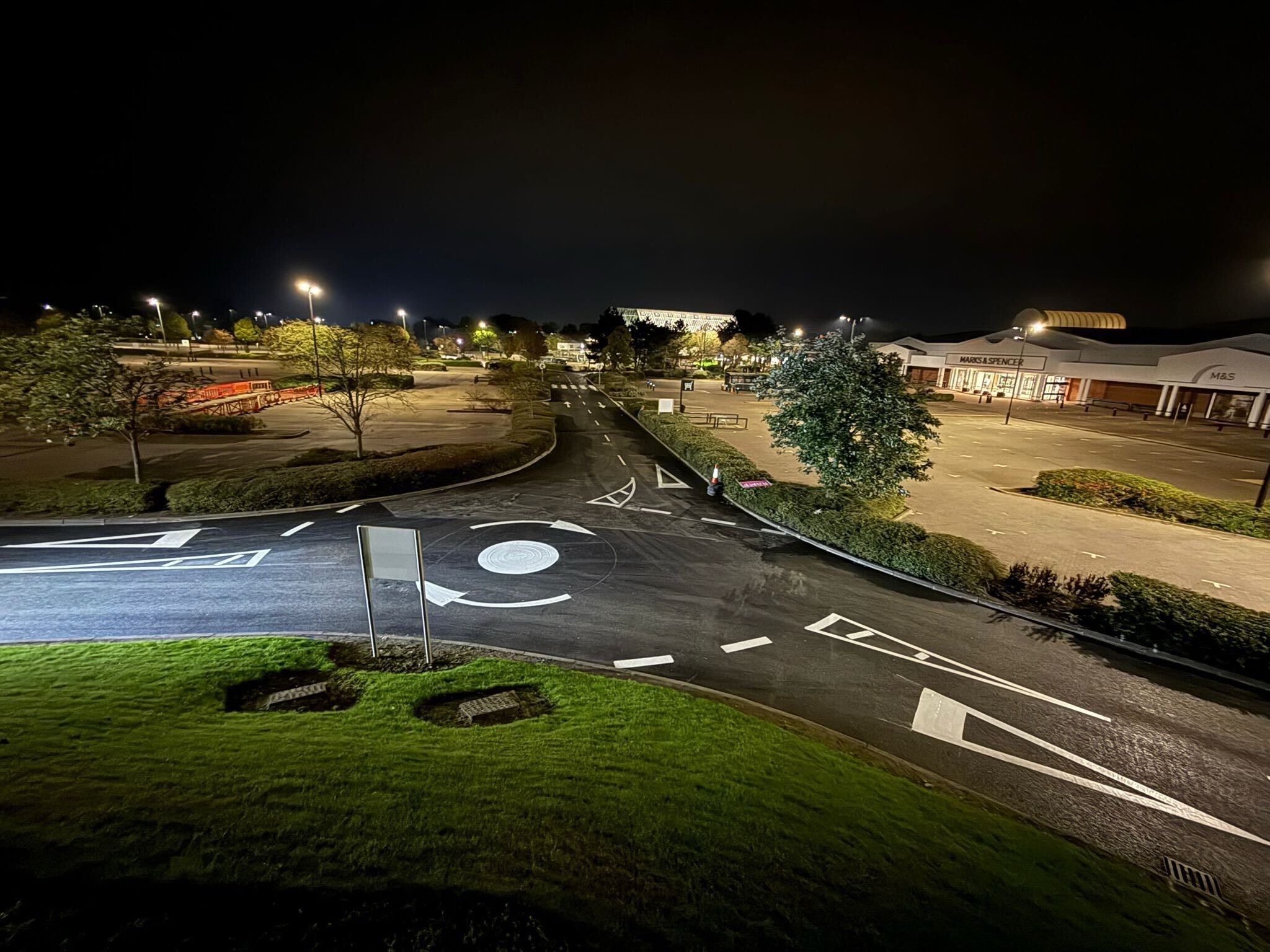
It’s one of the most practical questions anyone managing a live site needs answered:
“How soon can we let traffic back onto the freshly marked areas?”
On a busy car park or warehouse, every hour a section is closed costs something. Lost parking capacity, disrupted operations, tenant complaints. There’s always pressure to reopen as quickly as possible.
But opening too soon is one of the fastest ways to ruin a line marking job. So how long do you actually need to wait, and what affects that?
Why curing time matters.
When line marking material is first applied, it looks finished. The lines are sharp, the colour is bright, and everything appears ready to use.
But looking dry and being fully cured are two different things. Most marking materials go through a curing process after application where the material hardens, bonds to the surface, and reaches its full durability. Until that process is complete, the marking is vulnerable.
Driving on markings before they’ve cured properly causes:
- Tyre marks pressed into the surface of the material
- Smearing and dragging, especially on turning movements
- Scuffing that dulls the finish and reduces visibility
- In severe cases, lifting or peeling where the material is pulled away from the surface
The damage is usually permanent. You can’t touch it up or buff it out. The affected areas need to be cleaned off and redone, which means the section has to be closed again anyway.
Curing times by material.
Different materials cure at different speeds, and this is one of the main factors in choosing which system to use on a live site.
Standard road paint. This is the slowest to cure. In good conditions, light foot traffic might be possible after 20 to 30 minutes, but vehicle traffic typically needs to wait at least an hour or more. In cold or damp conditions, that can extend to several hours. Road paint cures by evaporation, so anything that slows evaporation slows curing.
Thermoplastic. Applied hot and cures as it cools. In most conditions, thermoplastic is ready for traffic within 10 to 15 minutes of application. This makes it a popular choice on live sites where fast turnaround is essential. However, it needs the surface to be at the right temperature for the bond to form properly.
MMA (methyl methacrylate). Cures through a chemical reaction rather than evaporation, which makes it less dependent on weather conditions. Typical cure times are 30 to 60 minutes depending on the formulation and temperature. MMA handles cold weather better than paint and is often the preferred choice for winter works or sites where moderate cure times are acceptable.
Epoxy and resin systems. Used more commonly for floor coatings than line marking, but where they are used, cure times can range from a few hours to overnight depending on the product and conditions. These systems are generally not suitable where fast reopening is needed.
These are general figures. The specific curing time for any product depends on the formulation, the surface temperature, air temperature, humidity, and application thickness. The manufacturer’s data sheet is always the definitive reference.
What affects curing speed.
Even within the same material type, curing time can vary significantly depending on conditions on the day.
The main factors:
- Temperature. Warmer conditions speed up curing for most materials. Cold surfaces and low air temperatures slow it down, sometimes dramatically.
- Humidity. High humidity slows evaporation-based curing (paint). It has less effect on chemically curing systems like MMA.
- Wind and airflow. A breeze helps paint dry faster by moving moist air away from the surface. In enclosed environments like multi-storey car parks, reduced airflow extends curing time.
- Application thickness. Thicker applications take longer to cure through. If material has been applied too heavily, the surface may feel dry while the material underneath is still soft.
- Surface temperature. This matters more than air temperature in most cases. A cold concrete slab on a mild day can still slow curing significantly because the material is in contact with the cold surface, not the warm air.
A good contractor monitors conditions throughout the job and adjusts expectations accordingly rather than relying on a fixed reopening time regardless of what’s happening on site.
How to protect markings during curing.
The work area needs to stay protected until the markings are fully cured. On a live site, that means the coning, barriers, or closures need to remain in place for the full curing period, not just until the crew finishes applying.
Practical measures include:
- Keeping cones and barriers in place until the contractor confirms the markings are ready for traffic
- Using “wet paint” or “fresh markings” signage to warn anyone who might wander into the area
- Briefing site security or management on which areas are off limits and when they’ll reopen
- Having someone check the markings before removing protection, especially in variable weather
On sites where the pressure to reopen is high, it’s worth remembering that 30 extra minutes of protection is far cheaper than redoing a section of marking because someone drove across it too soon.
Planning around curing times.
On live sites, curing time should be factored into the programme from the start, not treated as an inconvenience to be minimised after the fact.
This means:
- Choosing the right material for the turnaround time available. If a section needs to reopen within 20 minutes, thermoplastic is the obvious choice. If you have a few hours, paint or MMA may be suitable.
- Phasing work so that sections cure while the next section is being marked. This keeps the crew productive while previous areas harden.
- Scheduling the most time-sensitive areas for conditions when curing will be fastest. Warm, dry afternoons cure faster than cold mornings.
- Building realistic curing windows into the programme rather than assuming best-case figures every day.
A contractor who plans around curing times delivers a better result than one who rushes to reopen and hopes for the best.
What to do if markings get damaged.
If markings are driven on too early and damaged, the affected areas need attention sooner rather than later.
Tyre-marked or smeared sections should be:
- Assessed to determine whether the damage is cosmetic or whether the bond has been compromised
- Cleaned if surface contamination from tyres is the main issue
- Removed and reapplied if the material has been deformed or pulled away from the surface
Leaving damaged markings in place looks poor and can affect the performance and longevity of the marking in that area. It’s better to deal with it promptly than to leave it and hope nobody notices.
Conclusion.
So, how long should you wait before driving on fresh line markings?
It depends on the material. Thermoplastic can take traffic within minutes. MMA typically needs 30 to 60 minutes. Standard paint may need an hour or more, and longer in poor conditions.
The key is matching the material to the site’s operational needs, respecting the curing time on the day, and protecting the work area until the markings are genuinely ready. Rushing this step undoes everything that went into the preparation and application.
If you need line marking on a live site and turnaround time is critical, C&R Ltd can advise on the right material and programme to keep your site moving. We plan around curing times as a standard part of every job, not as an afterthought.
Why Choose C&R.
As one of the UK’s leading specialists in line marking, surface preparation, coatings, and cleaning, C&R delivers expert advice, professional results, and long-lasting performance nationwide.
Over 30 Years’ Experience
Trusted nationwide by major brands and local authorities.
Fully Accredited & Insured
Working to UK safety and environmental standards.
Complete Start-to-Finish Service
From design and preparation to marking and aftercare.
Nationwide Coverage
Responsive teams operating across England, Scotland, and Wales.