
Remarking vs Refreshing Line Markings: What’s the Difference? | C&R Ltd
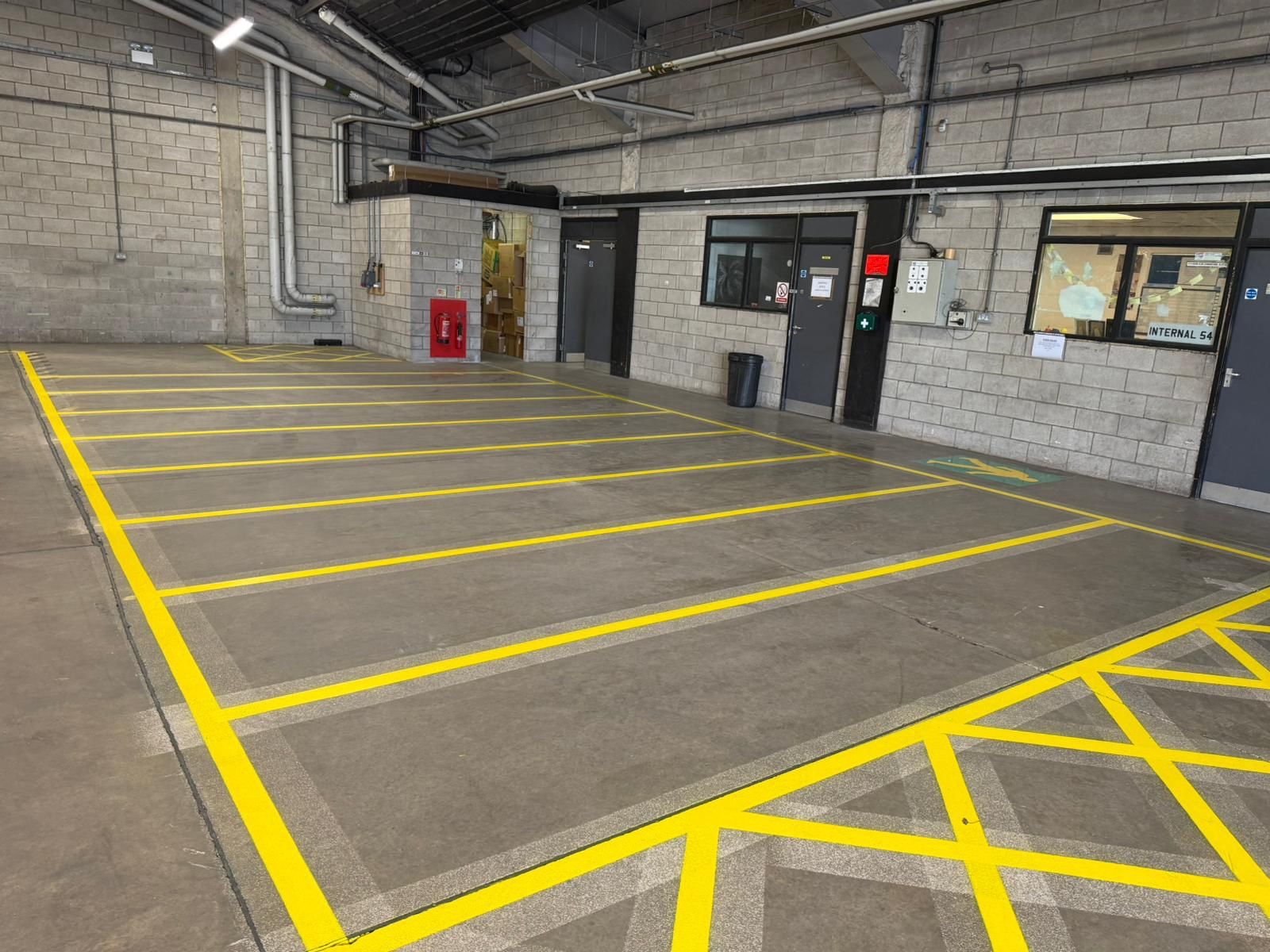
The two terms get used interchangeably, and that causes more confusion than you’d expect:
“Do we need the car park remarked, or just refreshed?”
They sound like they mean the same thing, but they describe different scopes of work with different costs, different levels of preparation, and different outcomes. Knowing which one your site actually needs helps you brief contractors properly and avoid paying for more than necessary, or getting less than you expected.
What refreshing means.
A refresh is essentially a top-up. The existing layout stays the same, and fresh material is applied over the top of the current markings to restore their visibility and definition.
Refreshing is appropriate when:
- The layout is correct and doesn’t need changing
- The existing markings are faded but still intact and well bonded
- The surface underneath is in reasonable condition
- There are no ghost lines or conflicting old markings to deal with
It’s a lighter touch approach. The preparation is typically limited to cleaning the surface and ensuring the existing markings are sound enough to accept new material on top. It’s quicker, less disruptive, and less expensive than a full remark.
Think of it as topping up what’s already there rather than starting again.
What remarking means.
A remark is a more comprehensive job. It usually involves removing or overriding existing markings and applying a new scheme, either because the layout is changing or because the existing markings have deteriorated to the point where painting over them isn’t viable.
Remarking is appropriate when:
- The layout needs to change (new bay positions, traffic flow, EV bays, accessibility improvements)
- Existing markings have failed, peeled, or debonded
- There are ghost lines from previous layouts that need removing
- The surface has been repaired or resurfaced since the last marking
- Multiple layers of old markings have built up to the point where they need stripping back
Remarking involves more preparation. Old lines may need removing by shot blasting or high pressure water. The surface may need cleaning, degreasing, or profiling. The new layout needs setting out from scratch rather than simply following what’s already there.
It takes longer, costs more, and involves more disruption, but it gives you a clean result with no compromise from what was there before.
Why the distinction matters for quoting.
If you ask three contractors to “refresh the car park markings” and what you actually need is a remark with line removal and layout changes, the quotes you get back will be all over the place.
Some contractors will price what you’ve asked for, which means the scope is wrong and you’ll end up with extras or a poor result. Others will price what they think you need, which might be more expensive but more accurate. And some will just give you a number without clarifying either way.
Being clear about whether the layout is staying the same or changing, and whether the existing markings are in good enough condition to paint over, helps everyone quote the same job. It also means you can compare proposals fairly.
Can you refresh some areas and remark others?
Yes, and this is often the most practical and cost-effective approach.
Car parks don’t wear evenly. High traffic areas like entrances, turning zones, and pedestrian crossings may need a full remark while quieter sections of standard bays might only need a refresh.
Splitting the scope like this means you’re putting the time and budget where it’s needed most rather than applying the same level of work across the entire site. A good contractor will identify which areas fall into which category during the survey rather than treating the whole car park as one job.
How to tell which your site needs.
A few things to check before you brief a contractor:
- Walk the site. Are the markings faded but still clearly defined, or are they broken up, peeling, or missing in places?
- Check the layout. Is the current layout still correct, or do you need changes for EV bays, accessibility, traffic flow, or tenant requirements?
- Look for ghost lines. Are there old markings visible that don’t match the current layout? If so, those need removing, which pushes you toward a remark.
- Check the surface. Has the car park had patch repairs or resurfacing since the last marking? New surface areas will need marking from scratch even if the rest can be refreshed.
- Ask about complaints. Are drivers getting confused by the layout? Are there accessibility issues? If so, a refresh of the same layout won’t fix the underlying problem.
If you’re not sure, asking a contractor to survey the site and recommend which approach is right is a reasonable starting point.
The cost difference.
As a rough guide, a refresh is typically less expensive than a remark because the preparation is lighter and the work is faster.
However, refreshing markings that should really be remarked is a false economy. If you paint over markings that are failing, the new material fails with them. If you refresh a layout that needs changing, you’re spending money to reinstate something that isn’t working.
The right approach is the one that matches the actual condition of the site, not the one that costs least on paper.
Conclusion.
So, what is the difference between remarking and refreshing line markings?
A refresh restores existing markings in the same layout. A remark involves more preparation and delivers a new scheme, either because the layout is changing or because the existing markings are beyond simple restoration.
Both have their place, and often the best approach is a combination of the two, targeting the level of work to what each area of the site actually needs.
If you’re not sure which your car park needs, C&R Ltd can survey the site and give you a clear recommendation. We’ll tell you what can be refreshed, what needs remarking, and what preparation is needed to get the best result from either.
Why Choose C&R.
As one of the UK’s leading specialists in line marking, surface preparation, coatings, and cleaning, C&R delivers expert advice, professional results, and long-lasting performance nationwide.
Over 30 Years’ Experience
Trusted nationwide by major brands and local authorities.
Fully Accredited & Insured
Working to UK safety and environmental standards.
Complete Start-to-Finish Service
From design and preparation to marking and aftercare.
Nationwide Coverage
Responsive teams operating across England, Scotland, and Wales.