
What Colour Should Line Marking Be in the UK?
It sounds like a simple question:
“What colour should line marking actually be?”
White is common. Yellow appears in warehouses. Green is often used for EV bays. Red sometimes marks danger zones.
But is there a rule — or can you choose whatever works?
The answer depends on where the markings are being applied and how the space is used.
Public highway vs private land.
On the public highway, line marking colours are strictly regulated. White and yellow have specific meanings under UK traffic regulations, and they must be used correctly to remain enforceable.
On private land — such as retail parks, warehouses, industrial estates and commercial car parks — there is more flexibility.
However, flexibility doesn’t mean random choice.
Why colour consistency matters.
Drivers and pedestrians rely on familiarity.
Using recognised colour conventions helps people instantly understand what a marking means without needing additional signage.
For example:
-
White typically defines bays and general traffic markings
-
Yellow often highlights restrictions or safety zones
-
Green commonly identifies EV charging bays
-
Red can mark high-risk or no-go areas
If colours are used inconsistently, confusion increases — particularly on busy or shared-use sites.
Warehouse environments and colour zoning.
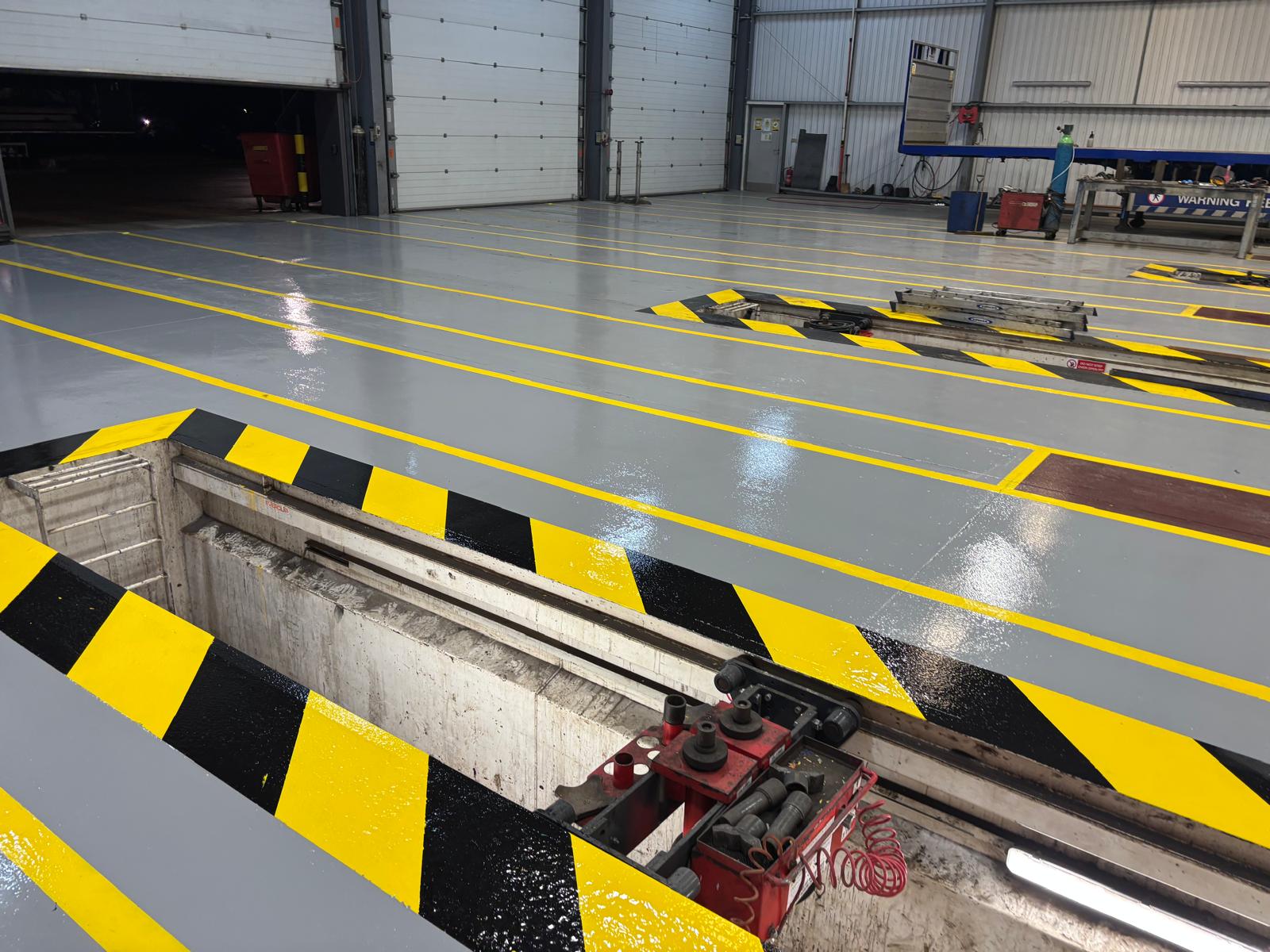
In warehouses, colour is often used strategically to separate functions.
For example:
-
Yellow for pedestrian walkways
-
Red for fire equipment zones
-
Blue for specific operational areas
-
Black and yellow for hazard markings
The goal is clear visual communication, especially where vehicles and pedestrians interact.
Contrast is just as important as colour.
Choosing the “right” colour isn’t just about convention — it’s about visibility.
A marking must stand out clearly against the surface beneath it. Faded asphalt, polished concrete, or patch repairs can all reduce contrast.
In some cases, widening lines or adjusting shade improves clarity more than simply choosing a brighter colour.
When colour choice can create problems.
Using non-standard or inconsistent colours can lead to:
-
Drivers ignoring markings
-
Confusion around priority or restrictions
-
Accessibility issues
-
Difficulty enforcing site rules
What looks distinctive on day one may not perform well once traffic patterns settle.
How C&R approaches line marking colour.
At C&R Ltd, colour selection is based on how the site operates — not just preference.
We consider:
-
Industry conventions
-
Traffic flow and pedestrian movement
-
Surface condition
-
Accessibility requirements
-
Long-term durability
The aim is always clarity first, appearance second.
Conclusion.
So, what colour should line marking be in the UK?
On the public highway, it must follow regulations. On private land, it should follow logic, best practice, and clarity.
If you’re planning new or refreshed line marking and aren’t sure which colours make sense for your site, C&R Ltd can provide practical advice that keeps things clear, consistent, and effective.
Why Choose C&R.
As one of the UK’s leading specialists in line marking, surface preparation, coatings, and cleaning, C&R delivers expert advice, professional results, and long-lasting performance nationwide.
Over 30 Years’ Experience
Trusted nationwide by major brands and local authorities.
Fully Accredited & Insured
Working to UK safety and environmental standards.
Complete Start-to-Finish Service
From design and preparation to marking and aftercare.
Nationwide Coverage
Responsive teams operating across England, Scotland, and Wales.