
Do EV Charging Bays Need Different Line Marking?
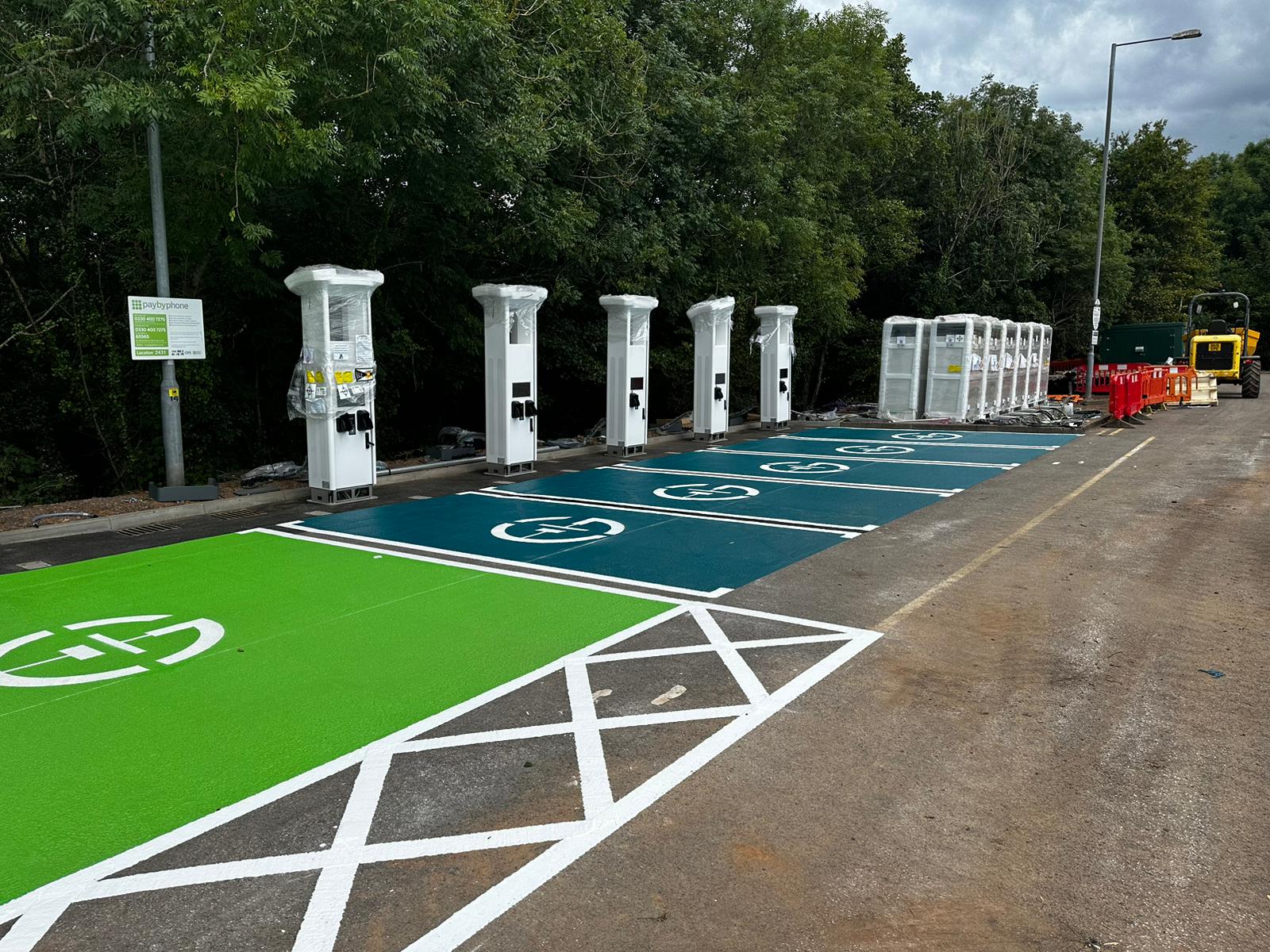
With the rapid growth of electric vehicles, more sites are adding charging points — which often leads to a common question:
“Do EV charging bays need different line marking, or will standard bays do?”
It’s an important consideration. Clear, well-designed EV bay markings help prevent misuse, support accessibility, and ensure charging infrastructure is used as intended.
At C&R Ltd, we regularly advise clients on how to mark EV charging bays correctly and effectively for real-world use.
Why EV charging bays need clear identification.
EV charging bays serve a specific purpose. If they aren’t clearly marked, they’re more likely to be blocked by non-EV vehicles or used incorrectly.
Distinct markings help drivers instantly recognise charging spaces, reducing frustration and improving turnover — particularly on busy retail and workplace sites.
How EV bay markings differ from standard parking bays.
While the bay size may be similar, EV bays usually require additional visual cues.
This often includes green colouring, EV symbols, clear text such as “EV Charging Only”, and defined buffer zones around charging equipment.
These features make the bay’s purpose obvious, even at a glance.
Private sites vs public highway expectations.
On private land, there’s flexibility in how EV bays are marked, but best practice is to follow widely recognised conventions.
Using familiar colours and symbols helps drivers understand the layout quickly and reduces misuse — especially on sites open to the public.
Public highway markings follow stricter regulations, but private sites benefit from aligning with recognised standards wherever practical.
Accessibility and safe use considerations.
EV bays aren’t just about parking — they’re active charging areas.
Good line marking helps maintain safe clearances around chargers, protects pedestrian routes, and ensures cables don’t create trip hazards.
On some sites, combining EV bays with accessible parking requires additional planning to ensure both needs are met correctly.
The impact of poor or unclear EV bay marking.
When EV bays aren’t clearly marked, common issues include non-EV vehicles parking in charging spaces, blocked chargers, user complaints, and inefficient use of infrastructure.
Over time, unclear layouts can also lead to reputational damage for customer-facing sites.
The importance of material choice and durability.
EV bays are often high-use spaces, particularly where chargers are limited.
Using durable materials such as MMA systems helps markings remain visible under frequent vehicle movement, braking, and turning.
As with all line marking, correct surface preparation is essential to achieve long-lasting results.
The C&R approach to EV bay line marking.
Every site is reviewed individually.
We consider traffic flow, charger position, pedestrian routes, accessibility requirements, and future expansion before recommending layouts and materials.
This ensures EV bays are clear, compliant with best practice, and built to perform long term.
Conclusion.
EV charging bays benefit from clear, purpose-designed line marking.
By using recognisable colours, symbols, and durable materials, sites can reduce misuse, improve safety, and make better use of their charging infrastructure.
If you’re installing new EV chargers or refreshing existing bays, C&R Ltd can advise on layout, marking, and materials to suit your site.
Why Choose C&R.
As one of the UK’s leading specialists in line marking, surface preparation, coatings, and cleaning, C&R delivers expert advice, professional results, and long-lasting performance nationwide.
Over 30 Years’ Experience
Trusted nationwide by major brands and local authorities.
Fully Accredited & Insured
Working to UK safety and environmental standards.
Complete Start-to-Finish Service
From design and preparation to marking and aftercare.
Nationwide Coverage
Responsive teams operating across England, Scotland, and Wales.